
How to Size a Pool Heat Pump for Arizona
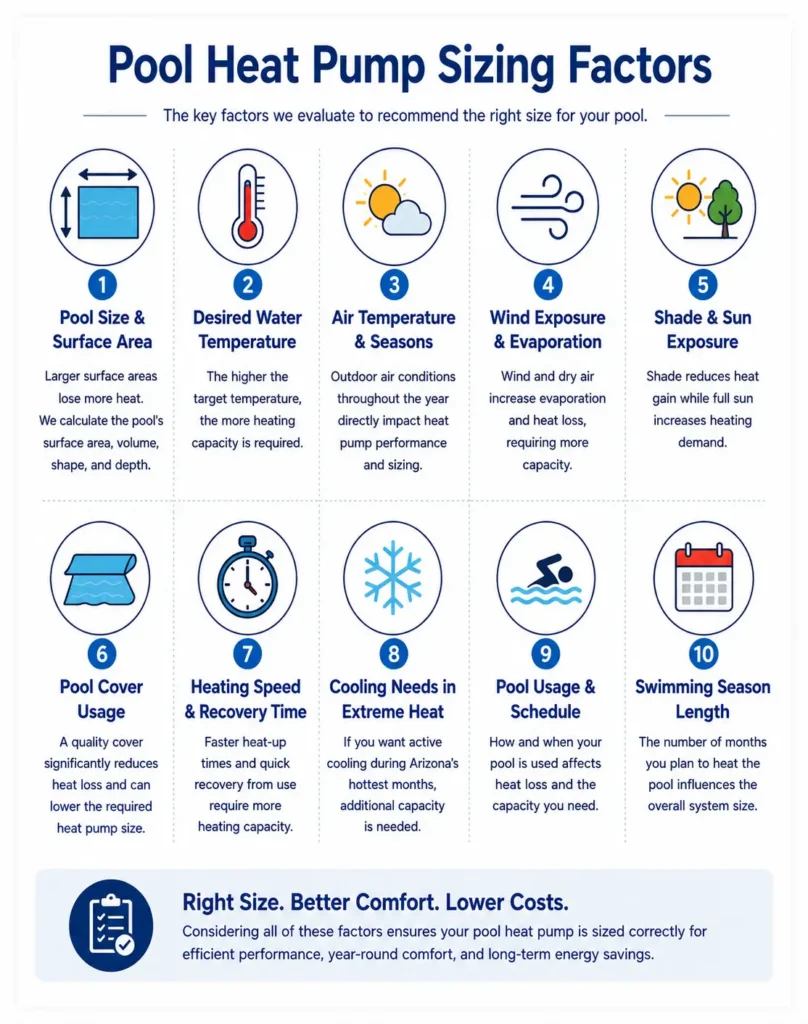
A Pool Heat Pump Sizing Guide should consider more than simply matching equipment to the number of gallons in your pool. Proper sizing considers the pool’s surface area, desired water temperature, seasonal air temperatures, wind exposure, heating expectations, and how the pool will actually be used.
Arizona presents unique sizing considerations. While our climate provides excellent conditions for efficient heat-pump operation during much of the year, cooler nighttime temperatures, wind, evaporation, and extreme summer conditions can significantly affect how much heating or cooling capacity a pool requires.
Arizona Pool Heat Pumps evaluates the entire application before recommending equipment. The goal is to select a system with enough capacity to achieve your desired water temperature while providing efficient, dependable heating and cooling for the way you use your pool.
Why Proper Pool Heat Pump Sizing Matters
A properly sized pool heat pump should provide enough heating and cooling capacity to meet your temperature goals without relying on an unnecessarily oversized system. The correct size depends on both the physical characteristics of the pool and the conditions in which the equipment will operate.
Undersizing can lead to longer heating times and difficulty maintaining the desired water temperature during challenging conditions. Oversizing without considering the complete application can also result in unnecessary equipment capacity. The goal is to match the heat pump system to the pool, climate, and owner’s expectations.
What Proper Sizing Helps Accomplish
- Maintain the desired pool temperature more consistently
- Provide adequate heating capacity during cooler conditions
- Provide effective cooling during extreme Arizona heat
- Improve overall system efficiency and performance
- Match heating and cooling capacity to actual pool usage
- Avoid unnecessary equipment oversizing
- Establish realistic expectations for heating and recovery time
The Main Factors That Determine Pool Heat Pump Size
A Pool Heat Pump Sizing Guide should evaluate a combination of factors rather than rely on one single measurement. Pool surface area, water volume, target temperature, seasonal air conditions, wind, evaporation, shade, pool covers, and expected heating speed can all influence the amount of heating and cooling capacity required.
Key Sizing Factors We Evaluate
- Pool surface area
- Pool water volume
- Desired water temperature
- Typical air temperature during the heating season
- Wind exposure and evaporation
- Shade and sun exposure
- Whether a pool cover is used
- Desired heating speed and recovery time
- Cooling requirements during extreme summer heat
- Pool usage and operating schedule
Pool Size and Surface Area
Pool surface area is one of the most important measurements used when sizing a pool heat pump. The larger the exposed surface of the water, the greater the potential heat loss through evaporation and contact with cooler air.
Pool volume also matters because it determines how much water must be heated or cooled. However, two pools containing a similar number of gallons can have very different surface areas, shapes, depths, and exposure conditions. That is why gallons alone should not be used to select a heat pump.
Measurements We Consider
- Pool length and width
- Total water surface area
- Average and maximum depth
- Approximate water volume
- Pool shape and configuration
- Attached spas, tanning ledges, or other water features
Desired Water Temperature
The temperature you want your pool to reach has a major impact on heat pump sizing. Maintaining an 82°F pool requires less heating capacity than maintaining 88°F water under the same outdoor conditions. The greater the difference between the air temperature and desired water temperature, the greater the heating demand.
This becomes especially important during Arizona’s cooler months and overnight hours. A properly sized system should account for the temperatures you realistically want to maintain and the time of year you expect to use the pool.
Questions That Affect Temperature Requirements
- What water temperature do you want to maintain?
- Which months do you plan to heat the pool?
- Will the pool be heated continuously or only when needed?
- How quickly do you expect the pool to reach the target temperature?
- Do you also want active cooling during Arizona’s hottest months?
Arizona Air Temperature and Seasonal Conditions
Pool heat pump performance is directly affected by the surrounding air temperature. Heat pumps transfer heat from the outside air into the pool water, so available heating capacity and efficiency can change as outdoor temperatures rise or fall.
Arizona’s warm climate provides favorable operating conditions for much of the year, but sizing still needs to account for cooler winter mornings and nighttime temperatures. A system intended primarily to extend the swimming season may have different capacity requirements than one expected to maintain warm water through the coldest periods of the year.
Seasonal Conditions We Consider
- Typical daytime and nighttime temperatures
- Months the pool will be heated
- Expected winter water temperature
- Overnight heat loss
- Desired length of the swimming season
- Summer cooling requirements
Wind Exposure and Evaporation
Wind is one of the biggest contributors to pool heat loss because it increases evaporation at the water surface. A pool in an open, exposed area can lose heat much faster than a pool protected by walls, landscaping, or surrounding structures.
Arizona’s dry climate can make evaporation especially important when sizing a heat pump. Higher wind speeds, low humidity, and cooler nighttime temperatures can all increase the amount of heating capacity required to maintain the desired water temperature.
Exposure Conditions We Evaluate
- Prevailing wind direction
- How exposed the pool is to open areas
- Nearby walls, fencing, or structures
- Landscaping and natural wind protection
- Evaporation potential Nighttime heat loss
Shade, Sun Exposure, and Pool Covers
The amount of direct sunlight a pool receives can significantly affect its heating requirements. A pool with good sun exposure can gain a considerable amount of natural heat during the day, while a heavily shaded pool may require additional heating capacity to reach and maintain the same water temperature.
A pool cover can also have a major impact on heat retention. By reducing evaporation and nighttime heat loss, a properly used cover can reduce the amount of energy needed to maintain the desired temperature. When sizing a heat pump, we consider both the pool’s sun exposure and whether a cover will be used regularly.
Sun Exposure & Pool Cover Factors
- Hours of direct sunlight the pool receives
- Morning versus afternoon sun exposure
- Shade from the home, patio structures, or trees
- Seasonal changes in sun exposure
- Whether a pool cover will be used
- How frequently the cover will be used
- Overnight heat-loss conditions
Heating Speed and Recovery Time
How quickly you expect the pool to reach the desired temperature is an important part of heat pump sizing. A system designed primarily to maintain an established water temperature may have different capacity requirements than a system expected to raise the pool temperature several degrees in a relatively short period.
Recovery time also matters after cooler nights, weather changes, or periods when the heat pump has been turned off. Selecting adequate capacity helps the system recover more effectively while still matching the actual way the pool will be used.
Heating Performance Goals We Consider
- Desired water temperature
- Starting pool-water temperature
- Number of degrees the pool needs to gain
- How quickly the pool should reach the target temperature
- Whether the pool will be maintained continuously or heated as needed
- Expected overnight temperature loss
- Typical swimming schedule
- Desired recovery time after cooler weather
Cooling Requirements During Arizona Summers
Pool heat pump sizing in Arizona isn’t only about heating. Extreme summer temperatures can push pool water well above a comfortable swimming temperature, especially when the pool receives prolonged direct sunlight. A properly selected heat-and-cool system can actively remove heat from the water when cooling is needed.
Cooling requirements should be considered during the original sizing process rather than treated as an afterthought. Pool size, sun exposure, desired water temperature, operating schedule, and summer conditions all influence the amount of cooling capacity the system may need.
Summer Cooling Factors We Evaluate
- Desired summer water temperature
- Typical peak pool-water temperature
- Amount of direct sun exposure
- Pool surface area and water volume
- Hours the circulation system operates
- How quickly the owner wants the pool cooled
- Frequency of summer pool use
- Whether both heating and cooling are expected throughout the year
Pool Usage and Operating Schedule
How often the pool is used and how the heating and cooling system will be operated can influence the amount of capacity needed. A pool maintained at a consistent temperature every day has different operating requirements than a pool heated primarily for weekends, special events, or occasional use.
Commercial-style operating schedules aren’t usually necessary for a residential pool, but understanding when and how often you expect to swim helps us recommend a system that matches your lifestyle rather than simply selecting equipment based on pool size alone.
Pool Usage Factors We Consider
- How many months of the year you plan to swim
- Daily versus occasional pool use
- Weekday and weekend swimming schedules
- Whether the pool temperature will be maintained continuously
- Planned periods when heating or cooling will be turned off
- Desired temperature when the pool is not being used
- How quickly the pool needs to be ready for swimming
When Multiple Pool Heat Pumps May Be Needed
Larger pools or applications with demanding heating and cooling requirements may benefit from using more than one heat pump. Multiple units can provide additional capacity while allowing the system to better match changing temperature conditions and pool demands.
Rather than automatically installing the largest possible single unit, we evaluate the total heating and cooling load, available equipment capacity, plumbing configuration, electrical requirements, and the owner’s performance expectations. For some larger Arizona pools, a properly designed multiple-unit system can provide the capacity and flexibility needed for year-round temperature control.
When We Consider Multiple Heat Pumps
- Large residential pools
- High heating or cooling demand
- Faster temperature recovery requirements
- Year-round heating and cooling expectations
- Pools with significant surface area or heat loss
- Applications requiring more capacity than a single unit can provide
- Situations where staged operation provides greater flexibility
How Arizona Pool Heat Pumps Sizes Your System
Our Pool Heat Pump Sizing Guide considers the complete application before recommending equipment. Every pool is different, which is why we don’t recommend choosing a heat pump based on pool gallons alone. We evaluate the pool, property, operating conditions, and your temperature expectations before recommending the appropriate heating and cooling capacity.
Our goal is to properly match the system to the way you actually want to use your pool. We consider both heating and cooling requirements so your equipment is sized for Arizona conditions and provides dependable performance throughout your swimming season.
Our Pool Heat Pump Sizing Process
- Determine pool dimensions, surface area, and approximate water volume
- Discuss your desired heating and cooling temperatures
- Identify the months you want to use the pool
- Evaluate sun, shade, wind, and exposure conditions
- Determine whether a pool cover will be used
- Discuss desired heating speed and recovery expectations
- Evaluate summer cooling requirements
- Review existing pool equipment, plumbing, and electrical conditions
- Calculate the heating and cooling capacity needed
- Recommend the appropriate heat pump or multiple-unit system
Get the Right Pool Heat Pump for Your Arizona Pool
A Pool Heat Pump Sizing Guide is a great starting point, but the right heat pump should be selected for your specific pool and the way you want to use it. Pool dimensions, temperature goals, property conditions, heating speed, cooling needs, and seasonal use all play a role in determining the appropriate system.
Arizona Pool Heat Pumps can evaluate your pool and recommend a properly sized heating and cooling solution based on your individual requirements.
Start With a FREE Pool Heat Pump Evaluation
We’ll review your pool, discuss your temperature and swimming-season goals, and help determine the heat pump capacity that best fits your application.
Get a FREE Pool Heat Pump Evaluation